

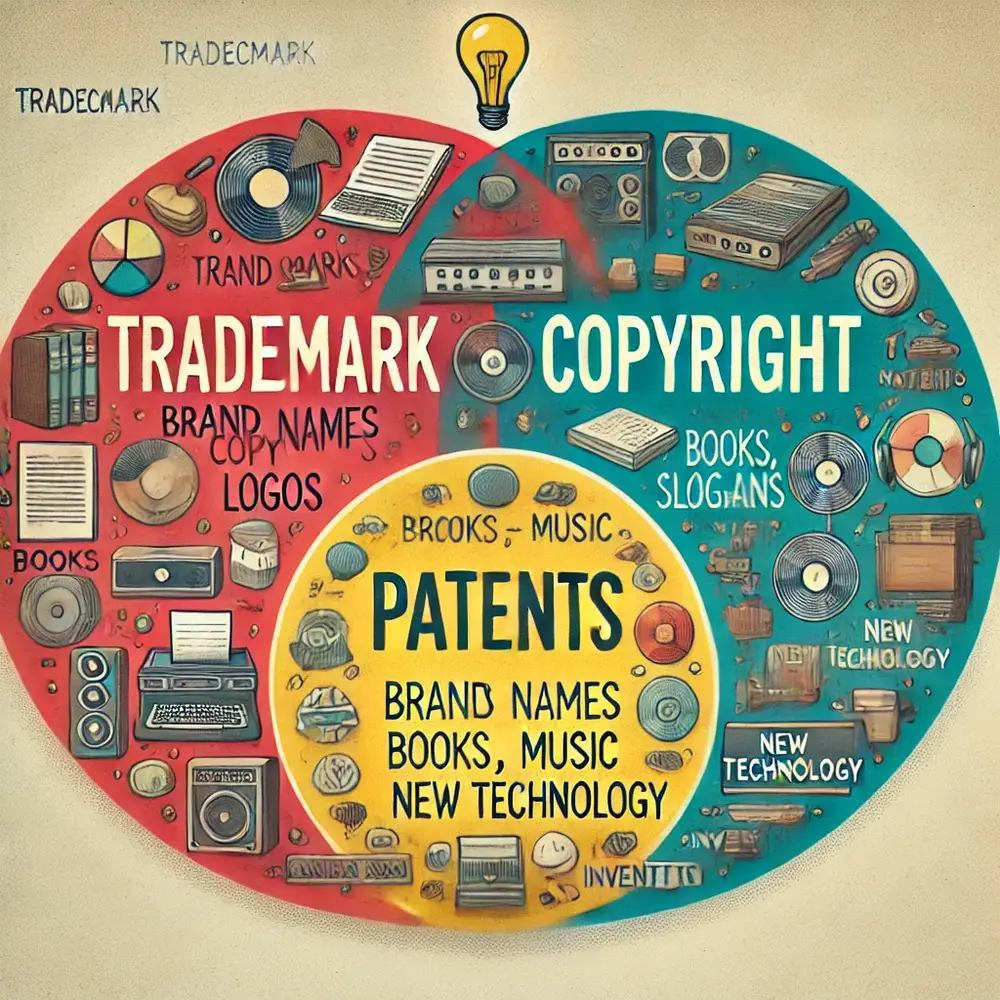
In the world of intellectual property (IP), trademarks, copyrights, and patents play crucial roles in protecting different types of assets. Understanding the differences between them is essential for businesses, entrepreneurs, and creators who want to safeguard their ideas and brand identity.
What is a Trademark?
A trademark is a symbol, word, phrase, or design that identifies and distinguishes a brand’s goods or services. It prevents others from using similar marks that could cause confusion. Trademarks are often represented by the ™ (TM) or ® (registered trademark) symbols.
Examples of Trademarks:
- The Nike swoosh logo
- The phrase “Just Do It”
- The golden arches of McDonald’s
What is a Copyright?
A copyright protects original works of authorship, such as books, music, films, and software. It grants the creator exclusive rights to reproduce, distribute, and display their work. Copyright does not protect ideas, facts, or methods—only the specific expression of those ideas.
Examples of Copyrighted Works:
- A novel by J.K. Rowling
- A song by Taylor Swift
- A Hollywood blockbuster movie
What is a Patent?
A patent protects inventions and grants the inventor exclusive rights to make, use, or sell the invention for a limited period, usually 20 years. Patents apply to new, useful, and non-obvious inventions in various industries, including technology, pharmaceuticals, and engineering.
Examples of Patented Inventions:
- The iPhone (Apple’s patents on touchscreen technology)
- Pharmaceutical drugs like Pfizer’s COVID-19 vaccine
- The electric light bulb (patented by Thomas Edison)
Key Differences Between Trademark, Copyright, and Patent
| Feature | Trademark | Copyright | Patent |
|---|---|---|---|
| Protects | Brand names, logos, symbols | Original works of authorship | Inventions and processes |
| Duration | As long as it’s in use and renewed | Life of the author + 70 years (varies) | 20 years (usually) |
| Examples | Nike logo, Coca-Cola bottle shape | Books, movies, songs | New pharmaceutical drug, machine |
| How to Get It? | File with USPTO (or local authority) | Automatic upon creation (registration optional) | File with USPTO (or local authority) |
Do You Need a Trademark, Copyright, or Patent?
If you are a business owner, securing a trademark for your brand identity is crucial. If you are an artist, writer, or musician, copyright protection ensures your creative works are safe. For inventors and engineers, patents prevent others from profiting from their groundbreaking innovations.
Conclusion
Trademarks, copyrights, and patents each serve distinct purposes in protecting intellectual property. Understanding their differences will help you make informed decisions about safeguarding your brand, creations, and inventions.
This article is for general information and is not legal advice. For advice on your circumstances, please speak to an attorney.